
Ryan Gravenberch’s Red Card Exposes a Major Problem in the Premier League
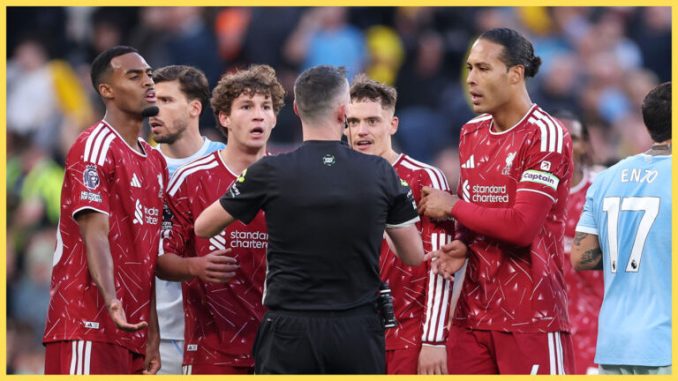
Ryan Gravenberch’s controversial dismissal during Liverpool’s 3-0 defeat to Manchester City has sparked fresh questions about refereeing standards and the Premier League’s decision-making.
The Liverpool midfielder was sent off by referee Chris Kavanagh after receiving a second yellow card for a challenge on Jérémy Doku in the second half. The decision proved decisive, with Manchester City taking advantage of their numerical superiority to secure a convincing victory at Anfield.
Pundits Question Gravenberch’s Dismissal
Several former players and football analysts criticised the decision to send Gravenberch off. Peter Schmeichel described it as a refereeing error, while Freddie Ljungberg and Jaap Stam also felt the second booking was too harsh.
Their reactions reflected the growing disagreement over whether the challenge warranted a dismissal in such an important match.
Although the challenge could reasonably have been penalised as a foul, critics argued that showing a second yellow card was an excessive response. The controversy was made worse by the fact that the match had remained finely balanced before Liverpool were reduced to ten men.
Manchester City Take Full Advantage
Gravenberch’s departure changed the complexion of the contest. Erling Haaland scored shortly after the sending-off, before Doku added another goal to put City firmly in control. Rayan Cherki later completed the 3-0 victory.
Liverpool had competed well for much of the match, but playing with ten men made their task significantly more difficult against a side with considerable attacking quality.
The result left Liverpool supporters frustrated, with many believing the team had been denied a fair opportunity to compete until the final whistle.
Questions Over the Referee’s Appointment
Another major talking point concerns Kavanagh’s geographical connection to Greater Manchester and whether officials should be appointed more carefully for high-profile matches involving clubs from their region.
The article’s argument is not that the referee was corrupt or deliberately favoured Manchester City. Instead, it questions whether the Premier League and its refereeing authorities did enough to avoid unnecessary controversy in a fixture already carrying significant tension.
With Manchester City facing scrutiny following a reported guilty verdict over financial-rule breaches, the decision has attracted even greater attention. The club’s case remains subject to the relevant appeal process, and the refereeing controversy is a separate matter.
The Premier League Must Restore Confidence
The incident highlights the importance of consistent refereeing, transparent decision-making and appointments that protect public confidence in the competition.
Even when an official acts in good faith, a controversial decision can have serious consequences for a club, its players and the outcome of a major fixture. Supporters understandably expect similar incidents to be judged consistently, regardless of the teams involved.
Liverpool cannot change the result against Manchester City, but the debate surrounding Gravenberch’s dismissal is unlikely to disappear quickly.
Ultimately, the Premier League and its refereeing authorities must demonstrate that their decisions are fair, consistent and beyond reasonable suspicion. Otherwise, incidents like this will continue to damage trust in the competition and overshadow the football itself.